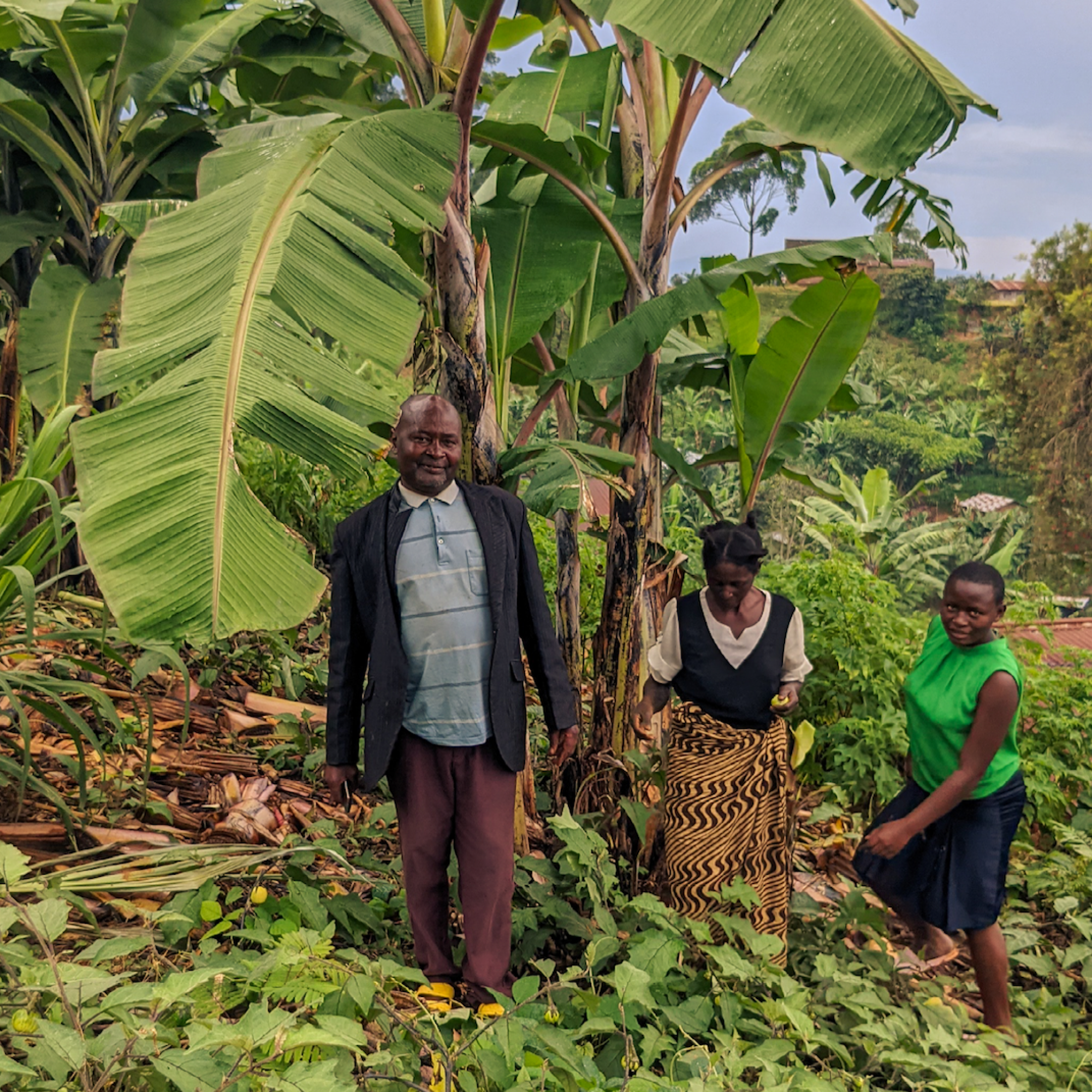
The results shocked him. That first trial yielded 350 kg, seven times what he planted. For the first time, he saw what was possible when soil is cared for and farming is done wisely.
Encouraged, he scaled up and later planted 240 kg of the improved Rwangume potato variety. This harvest brought in enough income to buy two rabbits and one goat, launching a cycle of improved nutrition and additional earnings as the animals reproduced.
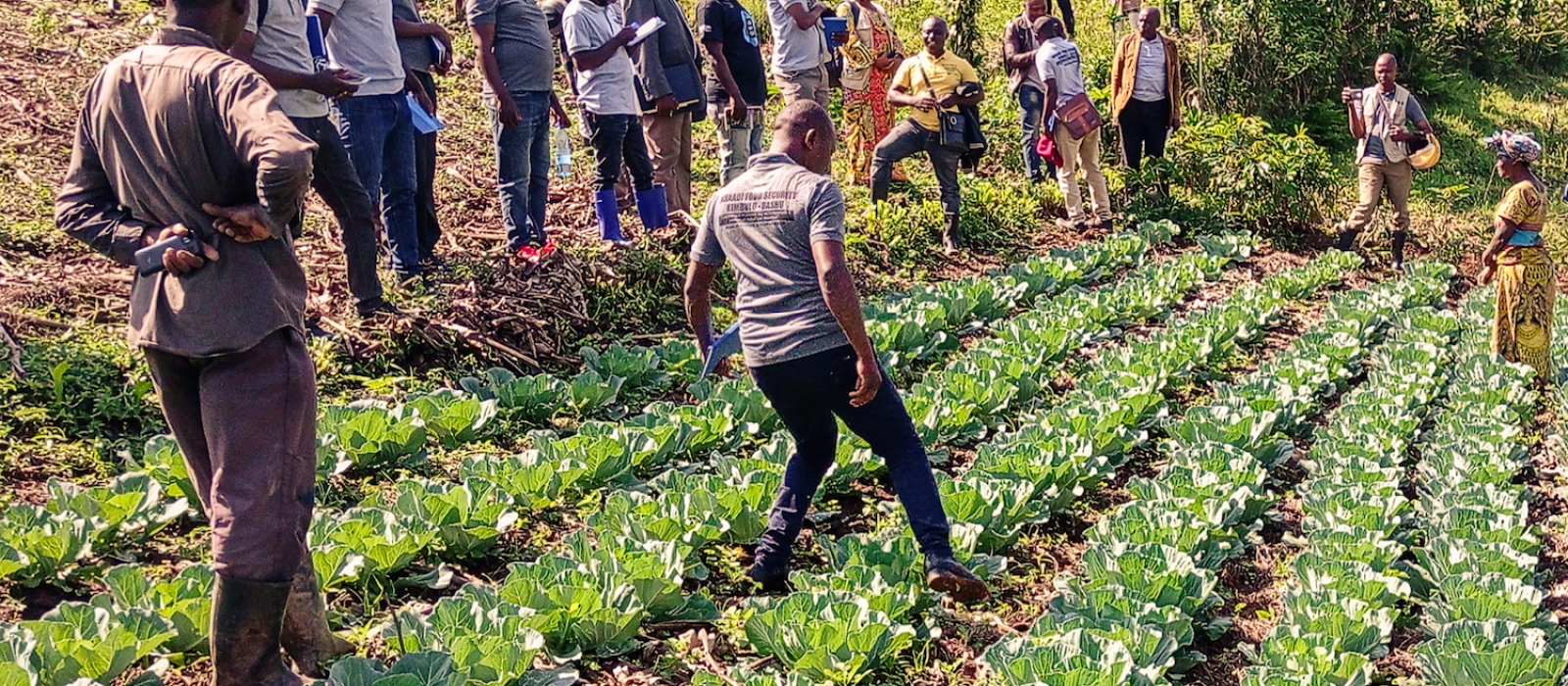
Kwabo did not stop with potatoes. He established a demonstration plot, welcoming neighbours to learn from his experience. One of them, Kahambu, visited his plot and saw firsthand the healthy crops. Inspired, she adopted the method and also saw increased yields.
“People used to think only large farms could succeed,” Kwabo told project staff. “But now our community sees that even small land can produce much when we learn and work together.”
The change reached beyond his own farm. With improved income, Kwabo repaired portions of his home and began planning for his children’s education. Nutrition improved as the family diversified their crops and gained access to eggs and milk from their animals.
His story is mirrored by farmers across the region. Through the church, they gather for prayer and encouragement, sharing both farming lessons and Scripture. The physical flourishing in their fields is echoed in spiritual growth and renewed unity within the community.
Where once he struggled to produce enough, Kwabo now stands as a resource to others. “I thank God for this opportunity,” he says. “We can feed our family now, and we help others learn. That is a blessing.”